
Overview
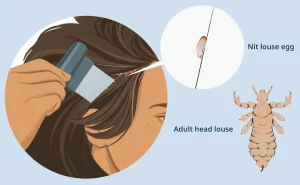
Lice are tiny parasitic insects that live on the scalp and hair and feed on small amounts of blood from the scalp. Head lice are the most common type and mainly affect children, especially those in close-contact settings such as schools and daycare centers. Lice infestations are not a sign of poor hygiene and can affect anyone.
Lice spread easily through direct head-to-head contact and, less commonly, by sharing personal items such as combs, hats, or pillows. While lice do not transmit disease, they can cause discomfort and irritation and often require treatment to eliminate.
Symptoms
Symptoms of lice may take several weeks to appear after infestation, especially during a first exposure. Some people may notice itching early, while others may not have symptoms at all.
Common symptoms include:
-
Itching of the scalp, neck, or ears caused by an allergic reaction to lice bites
-
A tickling or crawling sensation on the scalp
-
Red bumps or sores on the scalp, neck, or shoulders
-
Difficulty sleeping due to increased lice activity at night
-
Visible lice or nits attached to hair shafts, especially near the scalp
Scratching can sometimes lead to skin irritation or infection.
Causes
Lice infestation occurs when lice are transferred from one person to another. Lice cannot jump or fly; they move by crawling.
Common causes include:
-
Direct head-to-head contact with an infested person
-
Sharing personal items such as hats, scarves, combs, hair accessories, or headphones
-
Using bedding, towels, or clothing recently used by someone with lice
Lice survive only briefly off the human scalp, which limits their spread through the environment.
Risk factors
Certain factors increase the likelihood of getting lice:
-
Being a child, especially between the ages of 3 and 11
-
Close contact with other children in schools or childcare settings
-
Living in crowded conditions
-
Having a family member with an active lice infestation
-
Sharing personal hair-related items
Anyone can get lice, regardless of cleanliness or hair type.
Complications
Lice infestations are usually not serious, but complications can occur if the condition is not managed properly.
Possible complications include:
-
Skin infections caused by excessive scratching
-
Swollen lymph nodes due to secondary infection
-
Sleep disturbances
-
Emotional distress or embarrassment
Prompt treatment helps prevent these complications.
Prevention
Preventing lice involves reducing the chance of direct contact and sharing items that touch the head.
Preventive steps include:
-
Avoiding head-to-head contact during play or activities
-
Not sharing combs, brushes, hats, helmets, or hair accessories
-
Checking children’s hair regularly, especially during school outbreaks
-
Washing clothing, bedding, and towels used by an infested person in hot water
-
Treating all affected household members at the same time if lice are found
Early detection and proper treatment are key to controlling and preventing the spread of lice.
Advertisement
