
Overview
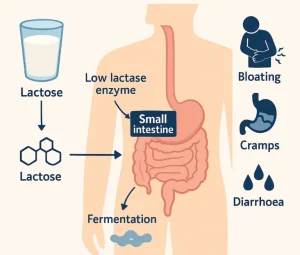
Lactose intolerance is a digestive condition in which the body is unable to fully digest lactose, a natural sugar found in milk and dairy products. This happens when the small intestine does not produce enough lactase, the enzyme needed to break down lactose into simpler sugars that can be absorbed into the bloodstream.
When lactose is not properly digested, it passes into the large intestine, where it is fermented by bacteria. This process leads to uncomfortable digestive symptoms. Lactose intolerance is common and varies in severity. Some people can tolerate small amounts of dairy, while others experience symptoms after consuming even minimal lactose.
Symptoms
Symptoms of lactose intolerance usually begin within 30 minutes to 2 hours after consuming foods or drinks that contain lactose. The severity of symptoms often depends on the amount of lactose consumed and the level of lactase deficiency.
Common symptoms include:
-
Abdominal pain or cramping
-
Bloating
-
Excess gas
-
Diarrhea
-
Nausea
-
Vomiting in some cases
Symptoms are limited to the digestive system and do not cause damage to the intestines.
Causes
Lactose intolerance is caused by a deficiency of the lactase enzyme in the small intestine. Without enough lactase, lactose cannot be properly digested.
Common causes include:
-
Primary lactose intolerance, which develops gradually with age
-
Secondary lactose intolerance due to illness or injury affecting the small intestine
-
Digestive conditions such as celiac disease or Crohn’s disease
-
Intestinal infections that temporarily reduce lactase production
-
Rare congenital conditions where lactase is absent from birth
The most common form is primary lactose intolerance, which is genetically determined.
Risk factors
Several factors can increase the likelihood of developing lactose intolerance:
-
Increasing age
-
Family history of lactose intolerance
-
Certain ethnic backgrounds, including African, Asian, Hispanic and Native American populations
-
Premature birth, which may affect enzyme development
-
Diseases or treatments that damage the small intestine
These risk factors influence how much lactase the body produces over time.
Complications
Lactose intolerance itself does not cause serious medical complications, but avoiding dairy products can lead to nutritional concerns if not managed properly.
Possible complications include:
-
Calcium deficiency
-
Vitamin D deficiency
-
Reduced bone density
-
Increased risk of osteoporosis over time
These complications can usually be prevented with proper dietary planning and supplementation.
Prevention
Lactose intolerance cannot always be prevented, especially when it is genetically determined. However, symptoms can often be managed effectively.
Preventive and management strategies include:
-
Limiting foods high in lactose
-
Choosing lactose-free or low-lactose dairy products
-
Consuming small portions of dairy with meals
-
Using lactase enzyme supplements
-
Including non-dairy sources of calcium and vitamin D in the diet
With proper dietary adjustments, most people with lactose intolerance can maintain good nutrition and quality of life.
Advertisement
