
Overview
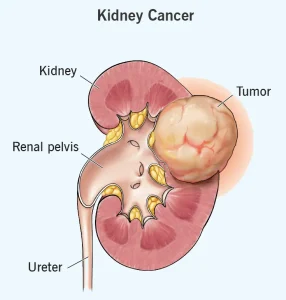
Kidney cancer is a disease in which malignant (cancer) cells form in the tissues of the kidney. The most common type in adults is renal cell carcinoma (RCC). It often develops silently and may be discovered incidentally during imaging for other reasons.
Types
-
Renal Cell Carcinoma (RCC) – ~90% of adult cases
-
Clear cell (most common)
-
Papillary
-
Chromophobe
-
-
Transitional (Urothelial) Cell Carcinoma – affects the renal pelvis
-
Wilms Tumor – mainly in children
-
Rare types – collecting duct, medullary carcinoma
Symptoms
Early kidney cancer may cause no symptoms. As it progresses:
-
Blood in urine (hematuria)
-
Persistent flank or lower back pain (one side)
-
A lump or mass in the abdomen
-
Unexplained weight loss
-
Fatigue
-
Fever not caused by infection
-
Anemia or high blood pressure
Risk Factors
-
Smoking
-
Obesity
-
High blood pressure
-
Family history of kidney cancer
-
Chronic kidney disease or long-term dialysis
-
Genetic conditions (e.g., von Hippel–Lindau disease)
-
Male sex, increasing age
Diagnosis
-
Imaging: Ultrasound, CT scan, MRI
-
Blood & urine tests: Check kidney function, anemia
-
Biopsy: Sometimes done if imaging is inconclusive
-
Staging: Determines tumor size and spread (Stages I–IV)
Treatment (Depends on Stage & Type)
Localized Disease
-
Surgery (main treatment)
-
Partial nephrectomy (remove tumor only)
-
Radical nephrectomy (remove entire kidney)
-
-
Ablation (for small tumors or non-surgical candidates)
-
Cryoablation
-
Radiofrequency ablation
-
Advanced or Metastatic Disease
-
Targeted therapy (e.g., VEGF inhibitors)
-
Immunotherapy (checkpoint inhibitors)
-
Radiation therapy (mainly for symptom relief)
-
Chemotherapy (limited role in RCC)
Prognosis
-
Early-stage kidney cancer has a good survival rate
-
Prognosis depends on:
-
Cancer stage
-
Tumor type
-
Overall health
-
-
Many patients live long, active lives after treatment
Prevention & Monitoring
-
Quit smoking
-
Maintain healthy weight
-
Control blood pressure
-
Regular follow-up imaging after treatment
If you want, I can provide:
-
Stage-wise survival rates
-
Differences between kidney cancer and kidney cysts
-
Treatment options explained simply
-
Symptoms that need urgent medical attention
Request an appointment
Advertisement
