
Overview
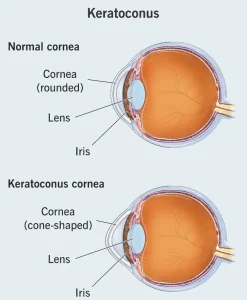
Keratoconus is a progressive eye condition in which the normally round cornea becomes thin and bulges outward into a cone-like shape. This abnormal shape affects how light enters the eye, leading to distorted and blurred vision. Keratoconus often begins in adolescence or early adulthood and may worsen over time. Early diagnosis and proper management can help slow progression and preserve vision.
Symptoms
Symptoms usually develop gradually and may worsen as the condition progresses. Common symptoms include:
-
Blurred or distorted vision
-
Increased sensitivity to light and glare
-
Frequent changes in eyeglass or contact lens prescriptions
-
Difficulty seeing at night
-
Eye strain or headaches
-
Halos around lights
Causes
The exact cause of keratoconus is not fully understood. It is believed to result from a combination of genetic, environmental, and biological factors that weaken the corneal structure.
Risk factors
-
Family history of keratoconus
-
Chronic eye rubbing
-
Allergic eye conditions
-
Certain genetic or connective tissue disorders
-
Poorly controlled asthma or eczema
Complications
-
Progressive vision loss
-
Corneal scarring
-
Sudden corneal swelling causing pain and vision changes
-
Need for specialized contact lenses
-
Corneal transplant in advanced cases
Prevention
Keratoconus cannot always be prevented, but progression may be reduced by:
-
Avoiding excessive eye rubbing
-
Managing eye allergies effectively
-
Regular eye examinations for early detection
-
Following recommended treatment and monitoring plans
-
Using protective eyewear when needed
With appropriate care, many people with keratoconus are able to maintain functional vision and avoid severe complications.
Advertisement
