
Overview
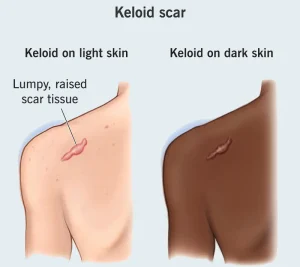
A keloid scar is an abnormal overgrowth of scar tissue that develops at the site of a skin injury. Unlike normal scars, keloids extend beyond the original wound boundaries and may continue to grow over time. They are benign but can cause cosmetic concerns, discomfort, or itching. Keloid scars can develop after minor skin injuries such as cuts, acne, piercings, or surgical incisions.
Symptoms
Keloid scars vary in appearance and size. Common features include:
-
Raised, thickened, and firm scar tissue
-
Smooth or shiny surface
-
Color ranging from pink or red to dark brown
-
Itching, tenderness, or pain around the scar
-
Continued growth beyond the original wound area
Causes
Keloid scars form due to an excessive healing response in which the body produces too much collagen during wound repair. The exact reason for this abnormal response is not fully understood, but genetic and biological factors play a role.
Risk factors
-
Personal or family history of keloid formation
-
Darker skin tones
-
Age between 10 and 30 years
-
Skin injuries such as piercings, tattoos, acne, or surgery
-
Wounds under high tension
Complications
-
Persistent itching or pain
-
Restricted movement if located near joints
-
Emotional distress or self-consciousness
-
Recurrence after treatment
Prevention
Keloid scars may not always be preventable, but risk can be reduced by:
-
Avoiding unnecessary skin trauma such as piercings or tattoos
-
Proper wound care to promote healthy healing
-
Using pressure dressings or silicone sheets on healing wounds when recommended
-
Informing healthcare providers of a history of keloids before surgery
-
Seeking early treatment if a scar begins to thicken or enlarge
Early intervention and appropriate management can help reduce the size and symptoms of keloid scars and improve overall skin appearance.
Advertisement
