
Overview
Jellyfish stings occur when a person comes into contact with the tentacles of a jellyfish, which contain tiny stinging cells called nematocysts. These cells release venom that can cause pain, skin irritation, and, in some cases, more serious systemic reactions. Jellyfish stings are common in coastal waters worldwide and vary in severity depending on the species, amount of contact, and individual sensitivity.
Symptoms
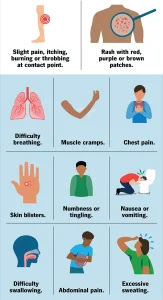
Symptoms of jellyfish stings can appear immediately or shortly after contact and may range from mild to severe:
-
Sharp, burning, or stinging pain at the site of contact
-
Red, raised welts or linear rash on the skin
-
Itching or tingling sensations
-
Swelling around the affected area
-
Nausea or vomiting in more severe cases
-
Muscle cramps or spasms
-
Difficulty breathing or chest pain in rare, severe reactions
Symptoms usually lessen over time but may persist for days in some individuals.
Causes
Jellyfish stings are caused by direct contact with jellyfish tentacles, either in the water or from detached tentacles washed ashore. The venom is injected when the nematocysts are triggered by touch. Stings can occur even if the jellyfish appears dead, as the stinging cells can remain active.
Risk Factors
Factors that increase the risk of jellyfish stings include:
-
Swimming or wading in ocean waters where jellyfish are present
-
Lack of protective clothing during water activities
-
Seasonal jellyfish blooms
-
Ignoring local warnings or safety flags
-
Children, who may be more vulnerable to severe reactions
Being aware of local marine conditions can reduce exposure.
Complications
Most jellyfish stings are mild, but complications may occur in some cases:
-
Skin infections from scratching the affected area
-
Persistent skin discoloration or scarring
-
Severe allergic reactions, including anaphylaxis
-
Heart or nervous system effects from highly venomous species
-
Muscle weakness or prolonged pain
Prompt and appropriate first aid helps minimize complications.
Prevention
While jellyfish stings cannot always be avoided, preventive measures can reduce the risk:
-
Checking local beach advisories and warning signs
-
Wearing protective swimwear or rash guards in jellyfish-prone areas
-
Avoiding swimming during known jellyfish blooms
-
Not touching jellyfish, even if they appear dead
-
Supervising children closely in coastal waters
Awareness and preventive actions are the most effective ways to reduce the risk of jellyfish stings and related complications.
Advertisement
