
Overview
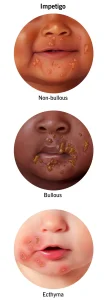
Impetigo is a highly contagious bacterial skin infection that primarily affects children, though it can occur at any age. It is usually caused by Staphylococcus aureus or Streptococcus pyogenes bacteria. The infection commonly appears on the face, hands, and other exposed areas, leading to red sores that can ooze, crust over, and spread rapidly through direct contact or contaminated objects.
Symptoms
-
Red sores or blisters, often around the nose, mouth, or hands
-
Oozing or leaking fluid from the sores
-
Formation of yellow-brown crusts over the lesions
-
Itching and mild discomfort
-
Occasionally, swollen lymph nodes near affected areas
-
In severe cases, fever or general malaise
Causes
Impetigo occurs when bacteria enter the skin through:
-
Minor cuts, scrapes, insect bites, or other skin injuries
-
Irritated skin from eczema or other conditions
-
Direct contact with an infected person or contaminated objects (towels, clothing, toys)
Risk factors
-
Age: Most common in children aged 2–6 years
-
Close-contact environments such as schools or daycare centers
-
Warm, humid climates that favor bacterial growth
-
Poor hygiene or crowded living conditions
-
Pre-existing skin conditions like eczema
Complications
-
Cellulitis (deeper skin infection)
-
Post-streptococcal glomerulonephritis (rare kidney inflammation)
-
Scarring or pigment changes in the skin after healing
-
Rapid spread to other areas of the body or to other individuals
Prevention
-
Regular handwashing and maintaining good personal hygiene
-
Avoiding sharing personal items such as towels, clothing, or bedding
-
Prompt cleaning and covering of minor cuts, scrapes, or insect bites
-
Keeping infected children home from school or daycare until no longer contagious
-
Treating pre-existing skin conditions to reduce the risk of bacterial infection
Treatment typically involves topical or oral antibiotics, depending on the severity of the infection, along with proper hygiene to prevent spread. Early intervention helps speed recovery and reduce complications.
Advertisement
