
Overview
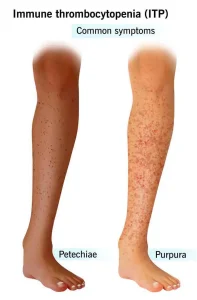
Immune thrombocytopenia (ITP) is a blood disorder in which the immune system mistakenly attacks and destroys platelets, the cells responsible for blood clotting. This leads to a low platelet count (thrombocytopenia) and an increased risk of bleeding and bruising. ITP can occur in both children and adults. In children, it often follows a viral infection and may resolve on its own, while in adults, it can be chronic and require long-term management.
Symptoms
-
Easy or excessive bruising (purpura)
-
Small red or purple spots on the skin (petechiae), often on the legs
-
Prolonged bleeding from cuts or injuries
-
Nosebleeds or bleeding gums
-
Blood in urine or stool in severe cases
-
Fatigue or weakness due to blood loss
Causes
ITP is caused by an autoimmune reaction in which the body produces antibodies that destroy platelets. The exact trigger is often unknown but may include:
-
Viral infections, particularly in children
-
Certain medications that affect the immune system
-
Other autoimmune disorders, such as lupus
-
Rarely, after vaccinations or in response to other immune triggers
Risk factors
-
Age: Children are more likely to develop acute ITP, while adults may develop chronic ITP
-
Gender: Chronic ITP is more common in adult women
-
Personal or family history of autoimmune disorders
-
Recent viral infection or immune system activation
Complications
-
Severe bleeding, including internal bleeding
-
Intracranial hemorrhage in rare, severe cases
-
Anemia from blood loss
-
Potential need for long-term treatment in chronic ITP
-
Increased risk of bleeding during surgery or trauma
Prevention
There is no guaranteed way to prevent ITP, but steps can help reduce complications:
-
Prompt evaluation and monitoring of unusual bruising or bleeding
-
Avoiding medications that can impair platelet function, such as NSAIDs, unless prescribed
-
Following medical advice for managing chronic autoimmune conditions
-
Regular follow-up with a hematologist in cases of chronic ITP
Most cases of ITP in children resolve on their own, while adults may require medications like corticosteroids, immunoglobulins, or other therapies to maintain safe platelet levels and prevent serious bleeding.
Advertisement
