
Overview
Hyponatremia is a condition in which the level of sodium in the blood is abnormally low. Sodium is an essential electrolyte that helps regulate water balance in and around cells, supports nerve function and plays a key role in muscle activity.
When sodium levels drop too low, water moves into the body’s cells, causing them to swell. This swelling can be especially dangerous in brain cells and may lead to serious neurological symptoms. Hyponatremia can develop suddenly or gradually and ranges from mild to life-threatening, depending on how quickly sodium levels fall and how low they become.
Symptoms
Symptoms of hyponatremia depend on how rapidly the sodium level drops and how severe the imbalance is.
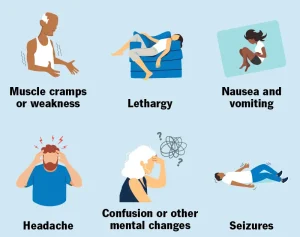
Mild to moderate symptoms may include:
-
Nausea and vomiting
-
Headache
-
Fatigue
-
Muscle weakness or cramps
-
Confusion or difficulty concentrating
-
Loss of energy
Severe symptoms may include:
-
Severe confusion
-
Seizures
-
Loss of consciousness
-
Coma
-
Abnormal behavior
Severe hyponatremia is a medical emergency and requires immediate treatment.
Causes
Hyponatremia occurs when there is an imbalance between water and sodium in the body. This may happen due to excess water, loss of sodium, or both.
Common causes include:
-
Drinking excessive amounts of water
-
Prolonged vomiting or diarrhea
-
Certain medications, such as diuretics, antidepressants and pain medicines
-
Kidney, heart or liver disease
-
Hormonal disorders affecting adrenal or thyroid function
-
Syndrome of inappropriate antidiuretic hormone secretion
-
Severe infections or trauma
-
Endurance exercise with excessive fluid intake
The underlying cause determines the severity and treatment approach.
Risk factors
Certain factors increase the likelihood of developing hyponatremia:
-
Older age
-
Chronic kidney, heart or liver disease
-
Use of diuretics or certain psychiatric medications
-
Endurance sports participation
-
Recent surgery
-
Hormonal disorders
-
Conditions causing fluid retention
People with multiple risk factors require closer monitoring.
Complications
If not treated promptly, hyponatremia can lead to serious and potentially life-threatening complications.
Possible complications include:
-
Brain swelling
-
Seizures
-
Permanent neurological damage
-
Coma
-
Respiratory arrest
-
Death in severe cases
Rapid correction of sodium levels can also be dangerous, so careful medical management is essential.
Prevention
Hyponatremia is not always preventable, but certain measures can reduce the risk.
Preventive steps include:
-
Drinking fluids in moderation, especially during exercise
-
Replacing electrolytes during prolonged physical activity
-
Following prescribed medication instructions carefully
-
Monitoring sodium levels in people with chronic medical conditions
-
Seeking medical care for persistent vomiting or diarrhea
Early recognition of symptoms and appropriate treatment help prevent serious complications and support safe recovery.
Advertisement
