
Overview
Hyperglycemia in diabetes refers to high levels of glucose, or sugar, in the blood. It occurs when the body has too little insulin, cannot use insulin properly, or both. Insulin is a hormone that helps move glucose from the bloodstream into the body’s cells for energy. When this process does not work correctly, glucose builds up in the blood.
Hyperglycemia is common in people with type 1 diabetes, type 2 diabetes, and gestational diabetes. It can develop gradually over hours or days and may go unnoticed at first. If left untreated, persistent high blood sugar can lead to serious short-term and long-term health problems.
Managing blood sugar levels through medication, diet, physical activity, and regular monitoring is essential to prevent complications related to hyperglycemia.
Symptoms
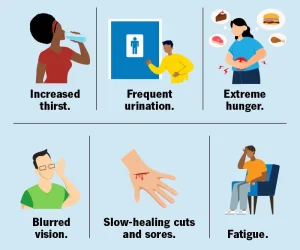
Symptoms of hyperglycemia often develop slowly and may become more noticeable as blood sugar levels rise.
Common symptoms include:
-
Increased thirst
-
Frequent urination
-
Fatigue or weakness
-
Blurred vision
-
Headache
More severe or prolonged hyperglycemia may cause:
-
Dry mouth
-
Weight loss
-
Difficulty concentrating
-
Recurrent infections, such as skin or urinary tract infections
If blood sugar remains very high for a long time, symptoms can worsen and may require urgent medical attention.
Causes
Hyperglycemia occurs when glucose builds up in the bloodstream instead of being used by the body’s cells.
Common causes include:
-
Not taking enough insulin or diabetes medication
-
Missing doses of diabetes medication
-
Eating more carbohydrates than planned
-
Physical inactivity
-
Illness, infection, or injury, which can raise blood sugar levels
-
Emotional or physical stress
-
Improper insulin injection technique or expired insulin
In people with type 2 diabetes, insulin resistance plays a major role, meaning the body does not respond effectively to insulin.
Risk factors
Certain factors increase the risk of developing hyperglycemia in people with diabetes.
Risk factors include:
-
Poorly controlled diabetes
-
Inconsistent medication use
-
Unhealthy eating patterns
-
Sedentary lifestyle
-
Obesity or excess body weight
-
Ongoing stress or lack of sleep
-
Acute or chronic illness
People newly diagnosed with diabetes may also experience hyperglycemia while learning to manage their condition.
Complications
Frequent or long-term hyperglycemia can damage blood vessels, nerves, and organs throughout the body.
Possible complications include:
-
Diabetic ketoacidosis in people with type 1 diabetes
-
Hyperosmolar hyperglycemic state in people with type 2 diabetes
-
Heart disease and stroke
-
Kidney disease
-
Nerve damage
-
Eye damage that can lead to vision loss
-
Slow wound healing and increased risk of infections
These complications develop more often when high blood sugar levels are not controlled over time.
Prevention
Preventing hyperglycemia involves consistent diabetes management and healthy lifestyle habits.
Prevention strategies include:
-
Monitoring blood sugar levels regularly
-
Taking diabetes medications exactly as prescribed
-
Following a balanced meal plan with controlled carbohydrate intake
-
Engaging in regular physical activity
-
Managing stress effectively
-
Adjusting medication or insulin during illness with guidance from a healthcare provider
-
Attending regular medical checkups to review diabetes control
With proper daily management and early intervention, most people with diabetes can prevent or reduce episodes of hyperglycemia and lower the risk of complications.
Advertisement
