
Overview
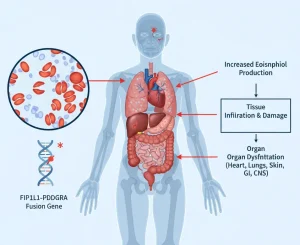
Hypereosinophilic syndrome is a rare group of disorders characterized by persistently high levels of eosinophils, a type of white blood cell, in the blood or tissues. Eosinophils play a role in immune responses, especially in allergies and parasitic infections. When their levels remain abnormally high for a long time, they can cause inflammation and damage to organs.
Hypereosinophilic syndrome is usually diagnosed when elevated eosinophil levels last for several months and no clear cause such as allergies, infections, or other diseases can be identified. The condition can affect multiple organs, including the heart, lungs, skin, nervous system, and digestive tract.
The severity of hypereosinophilic syndrome varies widely. Some people have mild symptoms, while others may develop serious, potentially life-threatening complications if organ damage occurs.
Symptoms
Symptoms depend on which organs are affected and how much tissue damage has occurred.
Common symptoms include:
-
Fatigue and general weakness
-
Fever
-
Weight loss
-
Skin rashes or itching
-
Muscle or joint pain
Organ-specific symptoms may include:
-
Shortness of breath or cough if the lungs are involved
-
Chest pain, swelling of the legs, or irregular heartbeat if the heart is affected
-
Abdominal pain, diarrhea, or nausea if the digestive tract is involved
-
Headaches, numbness, or weakness if the nervous system is affected
Some people may have few or no symptoms in the early stages, and the condition may be discovered during blood testing.
Causes
The exact cause of hypereosinophilic syndrome is often unknown, but it results from uncontrolled production or activation of eosinophils.
Possible causes include:
-
Abnormal bone marrow function leading to excess eosinophil production
-
Genetic changes affecting blood cell development
-
Immune system disorders that stimulate eosinophil growth
-
Certain cancers of the blood or bone marrow
In many cases, no specific trigger can be identified, which is why the condition is considered a diagnosis of exclusion.
Risk factors
There are no clearly defined risk factors for hypereosinophilic syndrome, but certain factors may increase the likelihood of developing the condition.
Risk factors may include:
-
Middle age, as the condition is more commonly diagnosed in adults
-
Male sex, with higher rates reported in men
-
History of unexplained high eosinophil counts
-
Certain genetic or bone marrow abnormalities
The condition can occur in people without any known risk factors.
Complications
Persistent high eosinophil levels can lead to inflammation and damage in various organs.
Potential complications include:
-
Heart damage, including inflammation of the heart muscle or heart failure
-
Blood clots due to vessel inflammation
-
Lung damage causing chronic breathing problems
-
Nerve damage leading to weakness or sensory changes
-
Gastrointestinal injury causing chronic digestive symptoms
Early diagnosis and treatment are important to reduce the risk of permanent organ damage.
Prevention
There is no known way to prevent hypereosinophilic syndrome, as the exact cause is often unclear.
Steps that may help reduce complications include:
-
Regular medical follow-up for people with unexplained high eosinophil levels
-
Prompt evaluation of new symptoms that may suggest organ involvement
-
Adhering to prescribed treatments to control eosinophil levels
-
Monitoring heart and other organ function as recommended by a healthcare provider
Early recognition and appropriate management can help control symptoms and prevent serious long-term complications.
Request an appointment
Advertisement
