
Overview
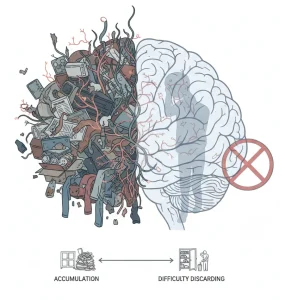
Hoarding Disorder is a mental health condition characterized by persistent difficulty discarding or parting with possessions, regardless of their actual value. This behavior leads to excessive accumulation of items that clutter living spaces and interfere with daily functioning.
People with hoarding disorder experience strong emotional attachment to possessions and significant distress at the thought of throwing items away. The condition can create unsafe living conditions, strain relationships, and impair quality of life. Hoarding disorder is recognized as a distinct diagnosis and differs from collecting, which is typically organized and does not disrupt daily life.
The condition often begins in adolescence or early adulthood and tends to worsen over time if left untreated.
Symptoms
The primary symptom of hoarding disorder is persistent difficulty discarding possessions. Other common features include:
-
Excessive accumulation of items, including newspapers, clothing, containers, or broken objects
-
Clutter that blocks living areas such as kitchens, hallways, and bedrooms
-
Strong emotional attachment to possessions
-
Belief that items will be needed in the future
-
Distress when attempting to discard items
-
Indecisiveness about what to keep or discard
-
Social withdrawal due to embarrassment about living conditions
In severe cases, homes may become unsafe due to fire hazards, unsanitary conditions, or limited access to essential areas.
Causes
The exact cause of hoarding disorder is not fully understood. It likely results from a combination of genetic, neurological, and environmental factors.
Possible contributing factors include:
-
Family history of hoarding behaviors
-
Traumatic or stressful life events
-
Difficulties with decision-making and organization
-
Perfectionism
-
Coexisting mental health conditions such as depression or anxiety
Brain imaging studies suggest differences in areas related to decision-making and emotional attachment.
Risk Factors
Certain factors increase the likelihood of developing hoarding disorder:
-
Family history of hoarding
-
Exposure to stressful or traumatic events
-
Older age
-
Social isolation
-
Coexisting mental health conditions such as obsessive-compulsive disorder, depression, or attention-deficit/hyperactivity disorder
Symptoms often become more noticeable and severe with age.
Complications
Hoarding disorder can lead to serious personal and social consequences.
Possible complications include:
-
Fire hazards
-
Increased risk of falls and injuries
-
Poor hygiene and sanitation
-
Pest infestations
-
Health problems due to unsanitary living conditions
-
Social isolation
-
Family conflict
-
Eviction or legal issues
The emotional distress associated with hoarding can significantly affect mental health and overall well-being.
Prevention
There is no guaranteed way to prevent hoarding disorder, but early intervention can reduce severity.
Helpful strategies include:
-
Seeking mental health support when hoarding behaviors first appear
-
Learning organizational and decision-making skills
-
Addressing underlying anxiety or depression
-
Participating in cognitive behavioral therapy
-
Building a support system of family and professionals
Early treatment improves outcomes and helps individuals regain control over their living spaces and daily activities.
Advertisement
