
Overview
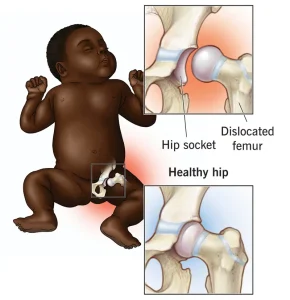
Hip Dysplasia is a condition in which the hip joint does not develop properly. The hip is a ball-and-socket joint, where the rounded head of the thigh bone fits into a cup-shaped socket in the pelvis. In hip dysplasia, the socket may be too shallow or improperly formed, causing the joint to be unstable.
This condition is most commonly diagnosed in infants and young children, known as developmental dysplasia of the hip (DDH). However, it can also occur in adolescents and adults if mild cases go undetected during childhood.
When untreated, hip dysplasia can lead to joint damage, pain, and early osteoarthritis. Early diagnosis improves the chances of successful treatment and normal hip development.
Symptoms
Symptoms vary depending on age and severity.
In infants and young children, signs may include:
-
Uneven skin folds on the thighs or buttocks
-
One leg appearing shorter than the other
-
Limited range of motion in one hip
-
A clicking or popping sound during hip movement
-
Limping once the child begins walking
In adolescents and adults, symptoms may include:
-
Hip pain, especially during activity
-
Groin pain
-
A feeling of hip instability
-
Limping
-
Decreased flexibility
-
Early-onset arthritis
Some mild cases may not cause noticeable symptoms until later in life.
Causes
Hip dysplasia occurs when the hip joint does not form correctly during fetal development or early infancy. The exact cause is not always known, but several contributing factors have been identified.
These may include:
-
Abnormal positioning in the womb, especially breech presentation
-
Family history of hip dysplasia
-
First-born status
-
Female gender
-
Tight swaddling of infants with legs straightened
In some cases, the ligaments around the hip may be too loose, allowing the joint to slip out of position.
Risk Factors
Certain factors increase the likelihood of hip dysplasia:
-
Female infants
-
Breech birth
-
Family history of the condition
-
Low amniotic fluid levels during pregnancy
-
First pregnancy
-
Tight swaddling practices
The condition is more common in girls than boys and often affects the left hip, although both hips can be involved.
Complications
If not treated early, hip dysplasia can lead to long-term complications.
Possible complications include:
-
Hip dislocation
-
Chronic hip pain
-
Limping or abnormal walking pattern
-
Decreased mobility
-
Early osteoarthritis
-
Joint degeneration requiring hip replacement surgery
Early treatment significantly reduces the risk of permanent joint damage.
Prevention
Hip dysplasia cannot always be prevented, but certain measures can reduce the risk of worsening the condition.
Helpful strategies include:
-
Safe swaddling techniques that allow the baby’s legs to bend and move freely
-
Routine newborn screening examinations
-
Ultrasound screening for high-risk infants
-
Early medical evaluation if hip instability is suspected
Prompt diagnosis and appropriate treatment, such as bracing in infancy or surgery in more severe cases, improve long-term outcomes and support healthy hip development.
Advertisement
