
Overview
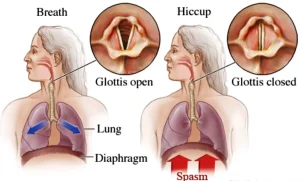
Hiccups are sudden, involuntary contractions of the diaphragm, the muscle that separates the chest from the abdomen and plays a key role in breathing. Each contraction is followed by a quick closure of the vocal cords, producing the characteristic “hic” sound. Most hiccups are harmless and last only a few minutes. However, persistent hiccups that last more than 48 hours may indicate an underlying medical condition and require medical attention.
Symptoms
The main symptom of hiccups is a repetitive, sudden “hic” sound caused by diaphragm spasms. Other features may include:
-
Brief interruption of normal breathing
-
A slight tightening sensation in the chest, throat, or abdomen
-
Irregular timing between hiccups
Persistent hiccups may interfere with eating, sleeping, or speaking.
Causes
Hiccups occur when the nerves that control the diaphragm become irritated or stimulated. Common short-term causes include:
-
Eating too quickly
-
Overeating
-
Drinking carbonated beverages
-
Sudden temperature changes
-
Swallowing air while chewing gum
-
Emotional stress or excitement
Persistent or chronic hiccups may be caused by:
-
Gastroesophageal reflux disease (GERD)
-
Nerve damage or irritation
-
Central nervous system disorders
-
Certain medications
-
Metabolic disorders
Risk Factors
Factors that may increase the likelihood of hiccups include:
-
Large meals or spicy foods
-
Alcohol consumption
-
Emotional stress
-
Recent surgery, especially abdominal surgery
-
Certain medical conditions affecting the brain or digestive system
Men are more likely than women to experience long-term hiccups.
Complications
While most hiccups are harmless, prolonged cases can lead to:
-
Sleep disturbances
-
Difficulty eating or drinking
-
Weight loss
-
Fatigue
-
Emotional distress
Persistent hiccups may signal a more serious underlying condition and should be evaluated by a healthcare provider.
Prevention
Occasional hiccups are difficult to prevent, but certain steps may help reduce the risk:
-
Eat slowly and avoid overeating
-
Limit carbonated drinks and alcohol
-
Manage stress levels
-
Avoid sudden temperature changes in food or drinks
If hiccups last longer than 48 hours or occur frequently without a clear cause, medical evaluation is recommended to determine and treat the underlying issue.
Advertisement
