
Overview
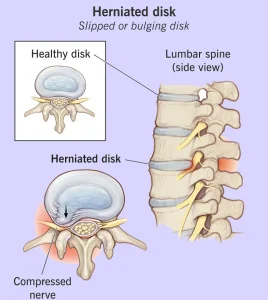
A herniated disk is a condition in which the soft, gel-like center of a spinal disk pushes through a tear in the tougher outer layer. Spinal disks act as cushions between the bones of the spine and help absorb shock during movement. A herniated disk is sometimes called a slipped disk or ruptured disk.
This condition most often affects the lower back, but it can also occur in the neck. A herniated disk may press on nearby nerves, causing pain, numbness or weakness in an arm or leg. Some people have a herniated disk without noticeable symptoms, while others experience significant discomfort that interferes with daily activities.
Symptoms
Symptoms of a herniated disk depend on the location of the disk and whether it presses on a nerve.
Common symptoms include:
-
Pain in the lower back or neck
-
Pain that radiates into an arm, leg, shoulder or buttock
-
Numbness or tingling in the affected area
-
Muscle weakness
-
Pain that worsens with movement, coughing or sneezing
In some cases, symptoms develop gradually. Severe nerve compression may cause problems with bladder or bowel control, which requires immediate medical attention.
Causes
A herniated disk occurs when the outer portion of a spinal disk weakens or tears.
Common causes include:
-
Age-related disk degeneration
-
Repetitive strain on the spine
-
Lifting heavy objects improperly
-
Sudden twisting or trauma to the spine
-
Wear and tear from daily activities
As disks age, they lose water content and become less flexible, making them more likely to rupture.
Risk factors
Certain factors increase the risk of developing a herniated disk:
-
Increasing age
-
Excess body weight
-
Jobs involving heavy lifting, bending or twisting
-
Repetitive physical activities
-
Smoking, which reduces oxygen supply to spinal disks
-
Sedentary lifestyle with poor core strength
Genetics may also play a role in disk degeneration.
Complications
Most herniated disks improve with time and conservative treatment, but complications can occur.
Possible complications include:
-
Chronic pain
-
Persistent nerve damage
-
Muscle weakness
-
Loss of sensation
-
Reduced mobility
-
Rarely, cauda equina syndrome, which can cause permanent nerve damage
Early treatment helps reduce the risk of long-term complications.
Prevention
While not all cases can be prevented, certain steps may lower the risk of a herniated disk.
Preventive measures include:
-
Using proper lifting techniques
-
Maintaining a healthy weight
-
Strengthening core and back muscles
-
Practicing good posture
-
Avoiding prolonged sitting
-
Staying physically active
-
Quitting smoking
Regular exercise and spine-friendly habits help protect the disks and support overall spinal health.
Advertisement
