
Overview
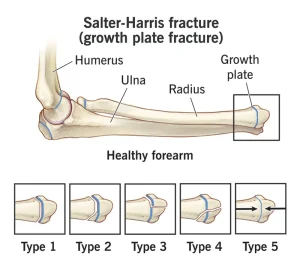
Growth plate fractures, also known as physeal fractures, are breaks in the areas of developing tissue near the ends of long bones in children and adolescents. These growth plates (physes) are the last portions of bones to harden, making them more susceptible to injury. Proper diagnosis and treatment are crucial because damage to the growth plate can affect bone development and lead to deformities or uneven limb length.
Symptoms
-
Pain at the site of the fracture, which may worsen with movement
-
Swelling and tenderness around the injured area
-
Bruising or redness in some cases
-
Decreased range of motion or inability to use the affected limb
-
Visible deformity in severe fractures
-
Limping or refusal to bear weight on the affected leg
Causes
Growth plate fractures are typically caused by trauma or stress, such as:
-
Sports injuries involving falls, twisting, or direct impact
-
Accidents or falls from height
-
Repetitive stress or overuse in adolescent athletes
-
Motor vehicle accidents or significant blunt trauma
Risk factors
-
Age: Most common in children and adolescents whose bones are still growing
-
Participation in high-impact sports like football, gymnastics, or soccer
-
Previous fractures or bone weaknesses
-
Activities involving rapid acceleration, deceleration, or twisting movements
Complications
-
Uneven bone growth or limb length discrepancies if the growth plate is damaged
-
Angular deformities if the fracture heals incorrectly
-
Long-term joint problems or arthritis in severe cases
-
Need for surgery if the fracture is displaced or affects bone alignment
Prevention
-
Encourage proper use of protective sports gear
-
Teach safe techniques for jumping, landing, and falling
-
Ensure age-appropriate physical activity and avoid overtraining
-
Strengthening exercises for muscles around bones and joints
-
Prompt evaluation of injuries to prevent further damage
Early detection and treatment of growth plate fractures are essential to minimize complications and ensure normal bone development. Treatment may involve immobilization with a cast, splint, or, in some cases, surgical intervention.
Advertisement
