
Overview
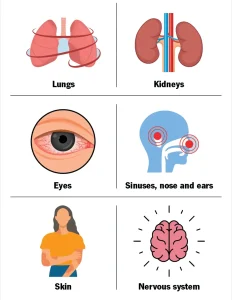
Granulomatosis with polyangiitis is a rare autoimmune disorder that causes inflammation of blood vessels (vasculitis), primarily affecting the respiratory tract and kidneys. The inflammation can restrict blood flow, damage tissues, and lead to organ dysfunction. Early diagnosis and treatment are crucial to prevent serious complications. The condition was formerly known as Wegener’s granulomatosis.
Symptoms
Symptoms of granulomatosis with polyangiitis can vary depending on the organs involved and may develop gradually or suddenly. Common symptoms include:
-
Persistent sinus infections or nasal congestion
-
Nosebleeds or nasal sores
-
Cough, sometimes with blood
-
Shortness of breath
-
Fatigue and fever
-
Joint and muscle pain
-
Kidney problems, including blood in urine or decreased urine output
-
Skin rashes or ulcers
Symptoms may fluctuate, with periods of worsening and remission.
Causes
Granulomatosis with polyangiitis occurs when the immune system mistakenly attacks blood vessels, leading to inflammation. The exact trigger is unknown, but possible contributing factors include:
-
Genetic predisposition
-
Environmental exposures such as infections
-
Abnormal immune responses
The inflammation leads to the formation of granulomas and damage to affected tissues.
Risk Factors
Factors that may increase the risk of developing granulomatosis with polyangiitis include:
-
Age between 40 and 60 years
-
Slightly higher prevalence in males
-
Family history of autoimmune or vasculitis disorders
-
Certain genetic markers linked to immune system function
The condition is rare but can occur in adults of any age.
Complications
If untreated or poorly managed, granulomatosis with polyangiitis can lead to serious complications, including:
-
Kidney failure
-
Severe lung damage, including bleeding or scarring
-
Hearing loss
-
Eye inflammation
-
Increased risk of infections due to immunosuppressive treatment
Prompt treatment reduces the risk of life-threatening complications.
Prevention
There is no known way to prevent granulomatosis with polyangiitis, as it is an autoimmune disorder. However, strategies to reduce complications include:
-
Early diagnosis and treatment with prescribed medications
-
Regular monitoring of kidney and lung function
-
Avoiding infections and promptly treating illnesses
-
Following medical advice for immunosuppressive therapy
Close medical supervision is essential to manage symptoms and maintain organ health.
Advertisement
