
Overview
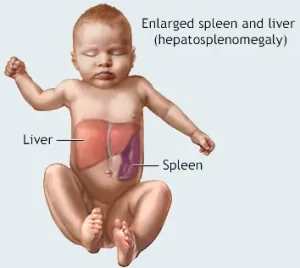
Gaucher disease is a rare inherited metabolic disorder in which certain fatty substances build up in organs due to the lack of an enzyme needed to break them down. This buildup mainly affects the spleen, liver, and bone marrow, leading to a wide range of symptoms. Gaucher disease is a genetic condition passed down through families and varies in severity depending on the type and age of onset.
Symptoms
Symptoms of Gaucher disease can differ widely and may appear in childhood or adulthood. Common symptoms include:
-
Enlarged spleen and liver
-
Fatigue due to anemia
-
Easy bruising or frequent nosebleeds
-
Bone pain or bone fractures
-
Joint problems
-
Delayed growth in children
-
Neurological symptoms in certain forms, such as eye movement problems or seizures
Some individuals may have mild symptoms, while others experience more severe complications.
Causes
Gaucher disease is caused by a genetic mutation that results in a deficiency of the enzyme glucocerebrosidase. Without this enzyme, fatty substances accumulate within cells, particularly in the spleen, liver, and bone marrow. The condition is inherited in an autosomal recessive pattern, meaning both parents must carry the gene mutation for a child to be affected.
Risk Factors
The primary risk factor for Gaucher disease is genetic inheritance. Factors that increase risk include:
-
Having a family history of Gaucher disease
-
Belonging to populations with higher carrier rates
-
Having parents who both carry the mutated gene
Gaucher disease can affect people of any sex or age.
Complications
If untreated, Gaucher disease can lead to serious health complications. Possible complications include:
-
Severe anemia and low platelet levels
-
Bone damage, chronic pain, and fractures
-
Delayed growth and puberty in children
-
Neurological damage in certain types
-
Increased risk of infections due to spleen enlargement
Long-term complications depend on the type and severity of the disease.
Prevention
Gaucher disease cannot be prevented because it is inherited. However, certain steps can help reduce complications and support early diagnosis:
-
Genetic counseling for families with a history of the condition
-
Carrier screening before planning a pregnancy
-
Early medical evaluation for symptoms such as unexplained organ enlargement or bone pain
Early diagnosis and appropriate treatment can significantly improve quality of life and long-term outcomes for individuals with Gaucher disease.
Advertisement
