
Overview
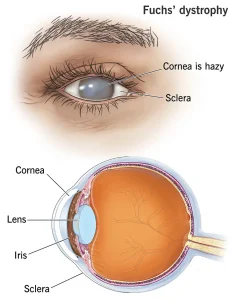
Fuchs dystrophy, also known as Fuchs endothelial corneal dystrophy, is a progressive eye disorder that affects the cornea, the clear front surface of the eye. The condition involves gradual loss of endothelial cells, which are responsible for maintaining proper fluid balance in the cornea. As these cells decline, fluid builds up, causing corneal swelling and blurred vision. Fuchs dystrophy usually develops in adulthood and tends to worsen over time.
Symptoms
Symptoms of Fuchs dystrophy often progress gradually:
-
Blurred or cloudy vision, especially in the morning
-
Glare or halos around lights
-
Difficulty seeing in low light
-
Eye discomfort or gritty sensation
-
Corneal swelling
-
Sensitivity to light
In advanced stages, painful blisters may form on the corneal surface.
Causes
Fuchs dystrophy is caused by degeneration of corneal endothelial cells. The exact reason for this cell loss is not fully understood, but genetic factors play a significant role. Abnormal protein deposits called guttae form on the cornea, interfering with fluid regulation and leading to swelling.
Risk Factors
Factors that increase the risk of developing Fuchs dystrophy include:
-
Family history of the condition
-
Increasing age
-
Female sex
-
Presence of guttae on the cornea
The condition often affects both eyes, though severity may differ.
Complications
As Fuchs dystrophy progresses, it can lead to:
-
Chronic corneal swelling
-
Persistent blurred vision
-
Corneal scarring
-
Eye pain due to surface blisters
-
Significant vision impairment or vision loss
Advanced disease may require surgical treatment to restore vision.
Prevention
There is no known way to prevent Fuchs dystrophy, but early detection helps manage symptoms:
-
Regular comprehensive eye examinations
-
Protecting eyes from injury
-
Managing eye dryness or irritation
-
Seeking prompt care for changes in vision
Early monitoring allows timely intervention and helps preserve visual function.
Advertisement
