
Overview
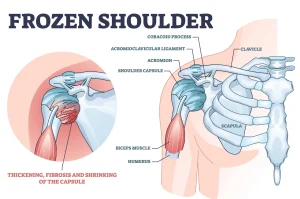
Frozen shoulder, also known as adhesive capsulitis, is a condition characterized by stiffness, pain, and limited movement in the shoulder joint. It develops when the connective tissue surrounding the shoulder joint becomes thickened and tight, restricting motion. Frozen shoulder typically progresses through stages and may last months to years. It is more common in people between the ages of 40 and 60 and occurs more frequently in women.
Symptoms
Symptoms of frozen shoulder usually develop gradually and may worsen over time:
-
Persistent shoulder pain
-
Stiffness that limits range of motion
-
Difficulty lifting the arm or reaching overhead
-
Pain that worsens at night or with movement
-
Reduced ability to perform daily activities
Symptoms often progress through painful, stiff, and recovery phases.
Causes
The exact cause of frozen shoulder is not fully understood. It often develops after prolonged shoulder immobility due to injury, surgery, or illness. In some cases, it occurs without a clear trigger. Inflammation of the shoulder capsule leads to scar tissue formation and joint stiffness.
Risk Factors
Factors that increase the risk of developing frozen shoulder include:
-
Prolonged shoulder immobilization
-
Diabetes
-
Thyroid disorders
-
Heart disease
-
Parkinson disease
-
Recent shoulder injury or surgery
These conditions may affect joint healing and mobility.
Complications
Frozen shoulder can lead to significant functional limitations:
-
Long-term shoulder stiffness
-
Chronic pain
-
Difficulty performing work or self-care activities
-
Reduced quality of life
Although most people eventually recover, full range of motion may not always return.
Prevention
Frozen shoulder may be prevented by maintaining shoulder mobility:
-
Starting gentle shoulder movement soon after injury or surgery, as advised
-
Managing chronic conditions such as diabetes
-
Avoiding prolonged immobilization of the shoulder
-
Performing regular stretching and range-of-motion exercises
Early intervention and consistent movement help reduce the risk of developing frozen shoulder and support recovery.
Advertisement
