
Overview
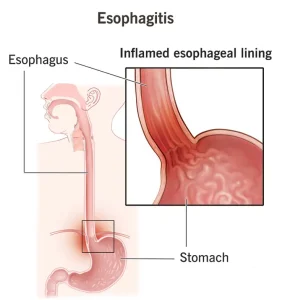
Esophagitis is inflammation of the esophagus, the muscular tube that carries food and liquids from the throat to the stomach. This inflammation can cause pain, difficulty swallowing, and discomfort in the chest. Esophagitis may be acute or chronic and can result from acid reflux, infections, medications, or allergic reactions. If left untreated, it can lead to long-term damage to the esophagus.
Symptoms
Symptoms of esophagitis can range from mild to severe depending on the cause and extent of inflammation. Common symptoms include:
-
Painful or difficult swallowing
-
Chest pain that may worsen with eating
-
Heartburn or acid reflux
-
Sensation of food sticking in the throat or chest
-
Nausea or vomiting
-
Sore throat or hoarseness
-
Cough or acid taste in the mouth
Persistent swallowing problems should be medically evaluated.
Causes
Esophagitis can develop due to several underlying factors. Common causes include:
-
Gastroesophageal reflux disease causing acid irritation
-
Infections, especially in people with weakened immune systems
-
Certain medications that irritate the esophageal lining
-
Allergic reactions, such as eosinophilic esophagitis
-
Radiation therapy to the chest area
-
Chemical injury from swallowing corrosive substances
Identifying the cause is essential for proper treatment.
Risk Factors
Several factors increase the risk of developing esophagitis:
-
Chronic acid reflux or heartburn
-
Obesity
-
Smoking
-
Excessive alcohol consumption
-
Use of certain oral medications without enough water
-
Weakened immune system
Reducing risk factors can help prevent recurrence.
Complications
If esophagitis is not treated, it may lead to complications:
-
Narrowing of the esophagus due to scarring
-
Ulcers or bleeding in the esophagus
-
Chronic pain and swallowing difficulty
-
Increased risk of Barrett’s esophagus
-
Reduced quality of life due to ongoing symptoms
Early treatment helps prevent permanent esophageal damage.
Prevention
Esophagitis can often be prevented or managed with lifestyle and medical measures:
-
Managing acid reflux with diet and medication
-
Avoiding foods and drinks that trigger heartburn
-
Taking medications with adequate water and remaining upright
-
Quitting smoking and limiting alcohol intake
-
Maintaining a healthy body weight
-
Seeking early care for persistent throat or chest symptoms
Prompt attention to symptoms and preventive care are key to protecting esophageal health.
Advertisement
