
Overview
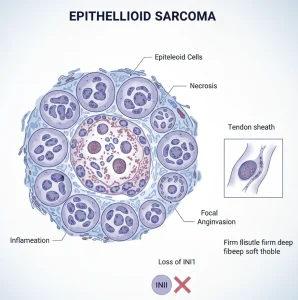
Epithelioid sarcoma is a rare and slow-growing type of soft tissue cancer that usually develops in the connective tissues of the body. It most commonly affects the hands, forearms, feet, or lower legs, but it can also occur in deeper soft tissues. This cancer often begins as a painless lump and may be mistaken for a benign condition in its early stages. Despite its slow growth, epithelioid sarcoma has a tendency to recur and spread if not treated early.
Symptoms
Symptoms of epithelioid sarcoma may be subtle at first and progress gradually. Common symptoms include:
-
A firm, painless lump or nodule under the skin
-
Slow enlargement of the lump over time
-
Skin ulceration or open sores in advanced cases
-
Pain or tenderness as the tumor grows
-
Reduced movement if the tumor affects nearby joints or muscles
Any persistent or enlarging soft tissue mass should be medically evaluated.
Causes
The exact cause of epithelioid sarcoma is not clearly understood. It develops due to abnormal growth of cells in soft tissues. Possible contributing factors include:
-
Genetic changes affecting tumor suppressor genes
-
Abnormal cell division in connective tissues
-
Rare inherited genetic conditions
Most cases occur without a clearly identifiable cause.
Risk Factors
Certain factors may increase the risk of developing epithelioid sarcoma:
-
Young adults, especially adolescents and people in early adulthood
-
Male gender
-
Tumors arising in the hands, arms, or lower limbs
-
History of previous soft tissue tumors in rare cases
This cancer remains rare even among individuals with risk factors.
Complications
Epithelioid sarcoma can lead to serious complications if not treated effectively:
-
Local recurrence after surgical removal
-
Spread to lymph nodes or distant organs such as the lungs
-
Chronic pain or functional impairment
-
Need for extensive surgery affecting limb function
-
Reduced survival in advanced stages
Early detection and aggressive treatment improve outcomes.
Prevention
There is no known way to prevent epithelioid sarcoma due to its unclear cause. However, early recognition and timely care can reduce complications:
-
Prompt evaluation of unexplained or persistent lumps
-
Regular follow-up after treatment to detect recurrence
-
Awareness of changes in existing soft tissue masses
-
Seeking specialist care for rare soft tissue tumors
Early diagnosis and appropriate management play a critical role in improving prognosis for epithelioid sarcoma.
Advertisement
