
Overview
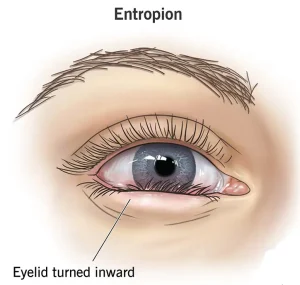
Entropion is an eye condition in which the eyelid, most commonly the lower eyelid, turns inward toward the eye. This inward turning causes the eyelashes and skin to rub against the surface of the eye, leading to irritation and discomfort. Entropion is more common in older adults but can occur at any age due to congenital factors, injury, or inflammation. Without proper treatment, it can damage the cornea and affect vision.
Symptoms
Symptoms of entropion are usually related to irritation of the eye surface and may worsen over time. Common symptoms include:
-
Redness and irritation of the eye
-
Excessive tearing or watery eyes
-
Sensitivity to light
-
Feeling of a foreign body in the eye
-
Eye pain or discomfort
-
Blurred vision in severe cases
-
Discharge or crusting around the eyelid
Persistent eye irritation should be evaluated by an eye care professional.
Causes
Entropion occurs when the muscles and tissues supporting the eyelid become weakened or damaged. Common causes include:
-
Age-related weakening of eyelid muscles and tendons
-
Scarring from previous eye infections, surgery, or trauma
-
Chronic eye inflammation or infections
-
Congenital eyelid abnormalities present at birth
-
Nerve damage affecting eyelid position
Understanding the cause helps guide appropriate treatment.
Risk Factors
Several factors can increase the risk of developing entropion:
-
Advancing age
-
History of eye surgery or trauma
-
Chronic eye infections or inflammatory conditions
-
Chemical burns or severe eye injuries
-
Certain congenital eyelid disorders
These factors increase the likelihood of eyelid malposition.
Complications
If entropion is not treated, it can lead to serious eye complications:
-
Corneal irritation or abrasions
-
Corneal ulcers and infections
-
Scarring of the cornea
-
Permanent vision impairment in severe cases
Early treatment is important to prevent long-term eye damage.
Prevention
Entropion cannot always be prevented, especially when related to aging or congenital factors. However, certain measures may reduce risk or severity:
-
Prompt treatment of eye infections and inflammation
-
Protecting the eyes from injury and chemical exposure
-
Regular eye checkups, especially in older adults
-
Seeking early care for persistent eyelid or eye discomfort
Timely diagnosis and management help protect eye health and preserve vision.
Advertisement
