
Overview
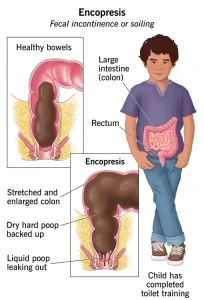
Encopresis is a childhood condition characterized by the repeated passage of stool in inappropriate places, such as clothing or the floor, in a child who is past the age when bowel control is normally expected. It is most commonly associated with chronic constipation and stool retention, leading to leakage of stool around impacted feces. Encopresis can be distressing for both the child and caregivers and often requires medical and behavioral management.
Symptoms
Symptoms of encopresis may develop gradually and can vary in severity. Common symptoms include:
-
Repeated soiling of underwear
-
Passage of large, hard stools
-
Constipation or infrequent bowel movements
-
Abdominal pain or bloating
-
Reduced appetite
-
Stool leakage without the child being aware
-
Urinary accidents due to pressure on the bladder
Causes
Encopresis usually occurs when chronic constipation causes stool to build up in the colon. Over time, the colon stretches and loses sensitivity, allowing softer stool to leak out. Contributing causes include:
-
Painful bowel movements leading to stool withholding
-
Low-fiber diet or inadequate fluid intake
-
Changes in routine such as toilet training or starting school
-
Emotional stress or anxiety
-
Underlying medical or neurological conditions in rare cases
Risk Factors
Several factors may increase the risk of encopresis, including:
-
Chronic constipation
-
Inadequate toilet training or negative toilet experiences
-
Low intake of fiber and fluids
-
Developmental delays
-
Emotional or behavioral stressors
Complications
If encopresis is not properly treated, it can lead to physical and emotional complications, such as:
-
Persistent constipation and abdominal discomfort
-
Rectal stretching and reduced bowel sensation
-
Urinary tract infections
-
Social embarrassment, anxiety, or low self-esteem
-
School avoidance or behavioral issues
Prevention
Encopresis can often be prevented by promoting healthy bowel habits in children. Preventive strategies include:
-
Encouraging a high-fiber diet with adequate fluids
-
Establishing regular toilet routines, especially after meals
-
Addressing constipation early and consistently
-
Providing positive reinforcement during toilet training
-
Reducing stress and supporting emotional well-being
With early recognition and appropriate treatment, most children with encopresis can achieve regular bowel control and improved quality of life.
Advertisement
