
Overview
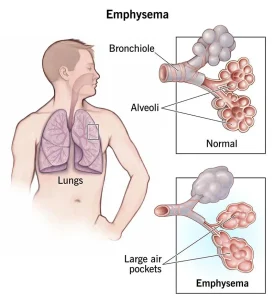
Emphysema is a chronic lung condition and a major form of chronic obstructive pulmonary disease. It involves damage to the air sacs in the lungs, called alveoli, which gradually lose their elasticity and break down. This damage reduces the surface area available for oxygen exchange, making breathing increasingly difficult. Emphysema develops slowly and symptoms often worsen over time, significantly affecting daily activities and quality of life.
Symptoms
Symptoms of emphysema usually appear gradually and become more noticeable as the disease progresses. Common symptoms include:
-
Shortness of breath, especially during physical activity
-
Chronic cough
-
Wheezing
-
Chest tightness
-
Fatigue and reduced exercise tolerance
-
Unintentional weight loss in advanced stages
-
Frequent respiratory infections
Causes
Emphysema is most commonly caused by long-term exposure to substances that irritate and damage the lungs. Common causes include:
-
Cigarette smoking, the leading cause
-
Long-term exposure to air pollution
-
Occupational exposure to dust, fumes, or chemicals
-
Secondhand smoke
-
Rare genetic conditions affecting lung tissue
Risk Factors
Several factors increase the risk of developing emphysema, including:
-
Smoking or long-term exposure to tobacco smoke
-
Increasing age
-
Occupational exposure to lung irritants
-
Living in areas with high air pollution
-
Genetic predisposition
Complications
If not properly managed, emphysema can lead to serious complications, such as:
-
Respiratory failure
-
Pulmonary hypertension
-
Heart problems, especially affecting the right side of the heart
-
Frequent lung infections
-
Collapsed lung
-
Reduced quality of life and physical disability
Prevention
Many cases of emphysema are preventable. Preventive strategies include:
-
Avoiding smoking and quitting tobacco use
-
Reducing exposure to air pollutants and occupational hazards
-
Using protective equipment in high-risk work environments
-
Maintaining regular physical activity
-
Getting recommended vaccinations to prevent respiratory infections
Early diagnosis and appropriate management can help slow disease progression and improve breathing and overall well-being for individuals with emphysema.
Advertisement
