
Overview
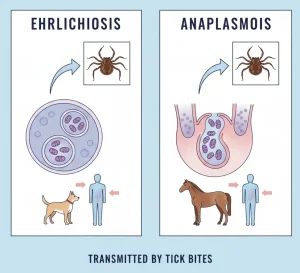
Ehrlichiosis and anaplasmosis are tick-borne bacterial infections that affect white blood cells and can cause flu-like illness ranging from mild to severe. Ehrlichiosis is caused by Ehrlichia species, while anaplasmosis is caused by Anaplasma phagocytophilum. These infections are transmitted through the bite of infected ticks and are most common during warmer months when tick activity is high. Early diagnosis and treatment are important to prevent serious complications.
Symptoms
Symptoms typically appear 1 to 2 weeks after a tick bite and may vary in severity. Common symptoms include:
-
Fever and chills
-
Headache
-
Muscle aches and joint pain
-
Fatigue or weakness
-
Nausea, vomiting, or diarrhea
-
Loss of appetite
-
Cough in some cases
-
Rash, more common in ehrlichiosis than anaplasmosis
Severe cases may involve confusion, difficulty breathing, or signs of organ dysfunction.
Causes
Ehrlichiosis and anaplasmosis are caused by bacteria transmitted through tick bites. Infection occurs when an infected tick feeds on a human and transfers the bacteria into the bloodstream. The bacteria then invade white blood cells, disrupting the immune system and triggering inflammation throughout the body.
Risk Factors
Several factors increase the risk of developing these infections, including:
-
Exposure to tick-infested areas such as forests, grasslands, or farms
-
Outdoor activities like hiking, camping, or gardening
-
Living in or traveling to regions where infected ticks are common
-
Lack of protective clothing or tick repellents
-
Delayed removal of attached ticks
Complications
Without prompt treatment, ehrlichiosis and anaplasmosis can lead to serious complications, especially in older adults or people with weakened immune systems. Possible complications include:
-
Respiratory failure
-
Kidney or liver damage
-
Severe bleeding disorders
-
Neurological problems such as confusion or seizures
-
Secondary infections
-
Death in rare, untreated cases
Prevention
Preventing tick bites is the most effective way to reduce the risk of ehrlichiosis and anaplasmosis. Helpful prevention measures include:
-
Using tick repellents on skin and clothing
-
Wearing long sleeves and pants in tick-prone areas
-
Performing thorough tick checks after outdoor activities
-
Showering soon after potential tick exposure
-
Removing ticks promptly and correctly
-
Keeping yards and outdoor areas free of tall grass and leaf litter
Early recognition of symptoms and timely medical treatment can greatly reduce the risk of severe illness and long-term complications from ehrlichiosis and anaplasmosis.
Request an appointment
Advertisement
