
Overview
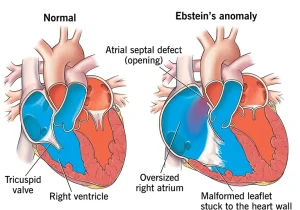
Ebstein anomaly is a rare congenital heart defect present at birth that affects the tricuspid valve, which separates the right atrium and right ventricle of the heart. In this condition, the tricuspid valve is abnormally formed and positioned lower than normal in the right ventricle. This leads to improper valve closure, allowing blood to flow backward into the right atrium. The severity of Ebstein anomaly varies widely, ranging from mild forms with few symptoms to severe cases causing significant heart dysfunction early in life.
Symptoms
Symptoms of Ebstein anomaly depend on the severity of the defect and may appear at birth, during childhood, or later in adulthood. Common symptoms include:
-
Shortness of breath, especially during physical activity
-
Fatigue or reduced exercise tolerance
-
Bluish discoloration of the lips or skin due to low oxygen levels
-
Irregular heartbeats or palpitations
-
Swelling of the legs, abdomen, or around the eyes in severe cases
-
Poor feeding or slow growth in infants
Causes
Ebstein anomaly develops during fetal heart formation, but the exact cause is not always known. Factors that may contribute include:
-
Abnormal development of the tricuspid valve during early pregnancy
-
Genetic influences or rare inherited mutations
-
Maternal exposure to certain medications or substances during pregnancy
-
Maternal health conditions affecting fetal development
Risk Factors
Several factors may increase the risk of Ebstein anomaly, including:
-
Family history of congenital heart defects
-
Use of certain medications during pregnancy
-
Maternal infections or chronic health conditions
-
Genetic syndromes associated with heart abnormalities
Complications
Complications of Ebstein anomaly can vary in severity and may worsen over time if not properly managed. Possible complications include:
-
Heart failure due to poor pumping efficiency
-
Abnormal heart rhythms, including supraventricular tachycardia
-
Blood clots and increased risk of stroke
-
Low blood oxygen levels
-
Delayed growth and development in children
-
Increased risk of sudden cardiac events in severe cases
Prevention
Because Ebstein anomaly is a congenital condition, it cannot always be prevented. However, certain measures may help reduce risk:
-
Receiving regular prenatal care during pregnancy
-
Avoiding harmful substances and unprescribed medications during pregnancy
-
Managing chronic medical conditions under medical supervision
-
Genetic counseling for families with a history of congenital heart disease
Early diagnosis and appropriate medical or surgical management can significantly improve quality of life and long-term outcomes for individuals with Ebstein anomaly.
Request an appointment
Advertisement
