
Overview
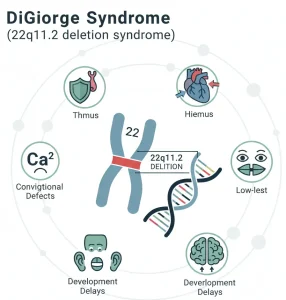
DiGeorge Syndrome, also known as 22q11.2 deletion syndrome, is a genetic condition caused by the deletion of a small segment of chromosome 22. This deletion affects multiple body systems and can lead to a wide range of physical, developmental, and immune-related problems. The severity and combination of features vary greatly among individuals.
Symptoms
Symptoms of DiGeorge syndrome differ widely and may be present at birth or appear later in life:
-
Congenital heart defects
-
Facial features such as a small chin, low-set ears, or wide-set eyes
-
Delayed growth and development
-
Learning difficulties or developmental delays
-
Speech and language problems
-
Weak immune system leading to frequent infections
-
Low calcium levels causing muscle cramps or seizures
-
Behavioral or mental health issues
Causes
DiGeorge syndrome is caused by a genetic abnormality:
-
Deletion of a segment on chromosome 22
-
Disrupted development of the thymus, parathyroid glands, and heart
-
Usually occurs spontaneously during fetal development
-
Rarely inherited from a parent with the same deletion
Risk Factors
Certain factors may increase the likelihood of having a child with DiGeorge syndrome:
-
Parent carrying the 22q11.2 deletion
-
Family history of the syndrome
-
Advanced parental age in some cases
-
No known environmental risk factors
Complications
DiGeorge syndrome can lead to long-term medical and developmental challenges:
-
Serious heart conditions
-
Recurrent infections due to immune deficiency
-
Low calcium levels affecting nerve and muscle function
-
Developmental and learning difficulties
-
Behavioral and psychiatric disorders
-
Feeding and growth problems
Prevention
There is no known way to prevent DiGeorge syndrome, but early diagnosis and management improve outcomes:
-
Genetic counseling for families with a history of the condition
-
Prenatal genetic testing when indicated
-
Early medical and developmental interventions
-
Regular monitoring of immune function and calcium levels
-
Coordinated care involving multiple specialists
Request an appointment
Advertisement
