
Overview
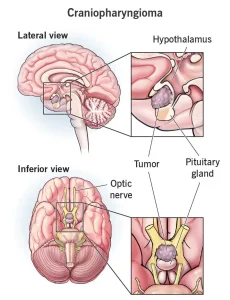
Craniopharyngioma is a rare, noncancerous brain tumor that develops near the pituitary gland, a small but critical structure at the base of the brain responsible for hormone regulation. Although benign, craniopharyngiomas can cause significant health problems because of their location near vital brain structures, including the optic nerves and hypothalamus. The condition can occur in both children and adults, with peaks in childhood and later adulthood.
Symptoms
Symptoms of craniopharyngioma vary depending on the tumor’s size, growth rate, and pressure on nearby structures. Symptoms often develop gradually.
Common symptoms include:
-
Headaches that worsen over time
-
Vision problems such as blurred vision, double vision, or loss of peripheral vision
-
Hormonal imbalances leading to growth problems in children
-
Delayed puberty or menstrual irregularities
-
Excessive thirst and frequent urination
-
Fatigue and weakness
-
Weight gain or changes in appetite
-
Nausea or vomiting due to increased pressure in the brain
In children, growth failure may be one of the earliest signs.
Causes
The exact cause of craniopharyngioma is not known. These tumors arise from remnants of embryonic tissue related to the development of the pituitary gland.
Key points about causes include:
-
Tumors originate from epithelial cells near the pituitary gland
-
They are not inherited in most cases
-
No clear environmental or lifestyle risk factors have been identified
-
The condition is not related to brain injury or infection
Craniopharyngiomas grow slowly but can still cause serious symptoms.
Risk factors
Craniopharyngioma does not have many well-defined risk factors, but certain factors are associated with its occurrence.
Risk factors include:
-
Childhood age group, especially between 5 and 14 years
-
Adults between 50 and 74 years
-
No known gender preference
-
No strong genetic or familial association in most cases
Because risk factors are limited, the condition is difficult to predict or prevent.
Complications
Despite being noncancerous, craniopharyngioma can lead to long-term complications due to its impact on surrounding brain structures.
Possible complications include:
-
Permanent vision loss or visual field defects
-
Lifelong hormone deficiencies requiring replacement therapy
-
Diabetes insipidus
-
Obesity and metabolic disorders
-
Cognitive or behavioral changes
-
Recurrence of the tumor after treatment
Ongoing medical follow-up is often required to manage these complications.
Prevention
There is no known way to prevent craniopharyngioma, as its cause is not fully understood.
General preventive considerations include:
-
Early medical evaluation of persistent headaches or vision changes
-
Monitoring growth and development closely in children
-
Regular follow-up imaging for individuals previously treated for craniopharyngioma
-
Lifelong endocrinology care to manage hormone-related effects
Early detection and long-term management play a key role in reducing complications and improving quality of life.
Request an appointment
Advertisement
