
Overview
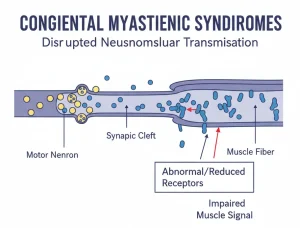
Congenital Myasthenic Syndromes (CMS) are a group of rare inherited neuromuscular disorders that affect the communication between nerves and muscles. These conditions are present from birth and result in impaired transmission of signals at the neuromuscular junction, leading to muscle weakness and fatigue. Unlike myasthenia gravis, CMS are not autoimmune disorders and do not involve antibodies.
Symptoms
Symptoms of congenital myasthenic syndromes vary widely depending on the specific genetic subtype and severity. They often appear in infancy or early childhood but may also present later. Common symptoms include:
-
Muscle weakness that worsens with activity and improves with rest
-
Drooping eyelids or difficulty keeping the eyes open
-
Weak facial muscles affecting expression
-
Difficulty chewing, swallowing, or speaking
-
Delayed motor milestones in infants
-
Poor head control in infancy
-
Breathing difficulties in severe cases
-
Exercise intolerance
Causes
Congenital myasthenic syndromes are caused by inherited genetic mutations that disrupt normal function of proteins involved in neuromuscular transmission. These mutations may affect presynaptic, synaptic, or postsynaptic components of the neuromuscular junction. CMS are usually inherited in an autosomal recessive pattern, though some forms follow autosomal dominant inheritance.
Risk Factors
Factors that increase the likelihood of congenital myasthenic syndromes include:
-
Family history of CMS or related neuromuscular disorders
-
Parents who are carriers of CMS-related genetic mutations
-
Consanguineous parentage in some populations
-
Presence of symptoms from birth or early infancy
Complications
If not properly diagnosed and managed, congenital myasthenic syndromes can lead to several complications:
-
Progressive muscle weakness
-
Feeding difficulties and poor weight gain in infants
-
Recurrent respiratory infections
-
Respiratory failure during illness or stress
-
Delayed physical development
-
Reduced quality of life due to chronic weakness
Prevention
Congenital myasthenic syndromes cannot be prevented because they are genetic conditions. However, early diagnosis and targeted treatment can significantly improve outcomes. Preventive care focuses on:
-
Genetic counseling for affected families
-
Early recognition of symptoms in infants and children
-
Regular neurological and respiratory monitoring
-
Avoidance of medications that may worsen neuromuscular transmission
-
Long-term follow-up with neuromuscular specialists
Advertisement
