
Overview
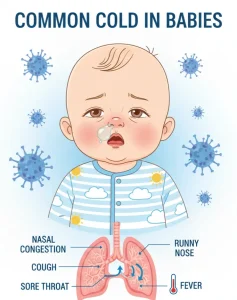
The common cold in babies is a mild viral infection of the upper respiratory tract, affecting the nose, throat, and sometimes the airways. It is caused by viruses such as rhinoviruses and is highly contagious.
While generally harmless, colds in babies require careful monitoring because their immune systems are still developing, and they may be more susceptible to complications such as ear infections or breathing difficulties.
Symptoms
Symptoms of a cold in babies may be subtle or more noticeable depending on age and severity.
Common signs include:
-
Runny or stuffy nose
-
Sneezing
-
Cough
-
Mild fever
-
Irritability or fussiness
-
Poor feeding or decreased appetite
-
Difficulty sleeping
-
Watery eyes
-
Mild congestion, sometimes causing noisy breathing
Symptoms usually develop gradually and last about 7–10 days.
Causes
Babies catch colds due to viral infections transmitted from others.
Key causes include:
-
Rhinoviruses (most common)
-
Coronaviruses (non-COVID types)
-
Respiratory syncytial virus (RSV)
-
Close contact with infected individuals (family members, caregivers)
-
Contaminated surfaces and toys
Babies are more prone to catching colds due to their immature immune systems and frequent hand-to-mouth behavior.
Risk Factors
Several factors increase a baby’s risk of getting a cold:
-
Attending daycare or being around large groups of children
-
Exposure to family members or caregivers with a cold
-
Premature birth or low birth weight
-
Weak or immature immune system
-
Seasonal factors, such as winter months
-
Exposure to secondhand smoke
Complications
Most colds in babies are mild, but complications can occur:
-
Ear infections (otitis media)
-
Sinus infections (sinusitis)
-
Bronchiolitis or pneumonia, especially in infants under 6 months
-
Dehydration due to poor feeding
-
Worsening of underlying conditions, such as asthma
Prompt medical attention is recommended if a baby has high fever, trouble breathing, or refuses to feed.
Prevention
While colds cannot be completely prevented, risk can be minimized through:
-
Frequent handwashing by caregivers and family members
-
Avoiding close contact with sick individuals
-
Keeping toys and surfaces clean and disinfected
-
Limiting exposure to crowded places during peak cold season
-
Ensuring good nutrition and adequate sleep to support immunity
-
Avoiding exposure to cigarette smoke
Supportive care, including nasal saline drops, gentle suctioning, and maintaining hydration, can help relieve symptoms in babies with a cold.
Request an appointment
Advertisement
