
Overview
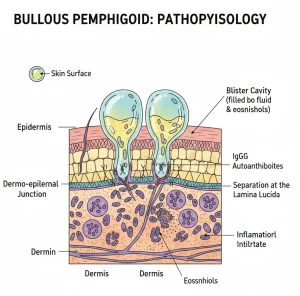
Bullous pemphigoid is a rare autoimmune skin disorder that causes large, fluid-filled blisters to form on the skin. It most commonly affects older adults and usually develops gradually. The condition occurs when the immune system mistakenly attacks the layers of skin, leading to inflammation and blister formation. Bullous pemphigoid is not contagious and can often be managed effectively with medical treatment.
Symptoms
Symptoms of bullous pemphigoid may appear slowly and can vary in severity. Common symptoms include:
-
Itching, which may occur weeks or months before blisters appear
-
Large, tense blisters filled with clear or slightly blood-tinged fluid
-
Blisters that do not easily rupture when touched
-
Red or inflamed skin around the blisters
-
Pain or burning sensation in affected areas
Blisters most often develop on the arms, legs, abdomen, or groin.
Causes
Bullous pemphigoid is caused by an abnormal immune response in which the body produces antibodies against proteins that help hold skin layers together. This leads to separation of skin layers and blister formation. Possible triggers include:
-
Age-related changes in immune function
-
Certain medications, such as some diuretics or antibiotics
-
Skin injuries, burns, or radiation therapy
-
Neurological conditions in some individuals
In many cases, no clear trigger is identified.
Risk factors
Several factors increase the risk of developing bullous pemphigoid:
-
Older age, especially over 60 years
-
Use of certain prescription medications
-
History of neurological disorders
-
Previous skin trauma or medical treatments affecting the skin
-
Autoimmune tendencies
The condition is uncommon in younger people.
Complications
With proper treatment, many people recover well, but complications can occur, especially if blisters are widespread or untreated:
-
Skin infections due to open blisters
-
Scarring or changes in skin color
-
Pain and discomfort affecting daily activities
-
Side effects from long-term medication use
-
Increased risk of complications in older adults
Early treatment helps reduce the risk of serious outcomes.
Prevention
There is no known way to completely prevent bullous pemphigoid, but certain steps may help reduce complications and flare-ups:
-
Following prescribed treatment plans closely
-
Avoiding skin trauma and excessive friction
-
Keeping skin clean and well cared for
-
Reporting new medications or symptoms to a healthcare provider
-
Regular medical follow-up, especially for older adults
Early recognition and ongoing care are important for managing bullous pemphigoid and maintaining skin health.
Request an appointment
Advertisement
