
Overview
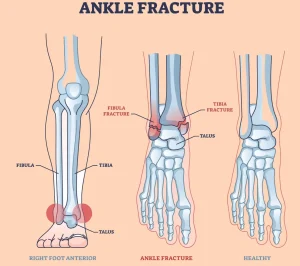
A broken ankle is a fracture involving one or more of the bones that form the ankle joint, including the tibia, fibula, or talus. It can range from a small crack to a severe break that disrupts joint stability. Broken ankles commonly occur due to falls, sports injuries, or accidents and usually require prompt medical evaluation to ensure proper healing and function.
Symptoms
Symptoms of a broken ankle often appear immediately after injury.
• Sudden and severe pain
• Swelling around the ankle or foot
• Bruising or discoloration
• Inability to bear weight on the affected leg
• Tenderness to touch
• Deformity or abnormal position of the ankle in severe cases
Causes
A broken ankle occurs when excessive force is applied to the ankle joint.
• Slips, trips, or falls
• Twisting injuries during sports or physical activity
• Motor vehicle accidents
• Direct impact or trauma to the ankle
• Missteps on uneven surfaces
Risk factors
Certain factors increase the likelihood of sustaining a broken ankle.
• Participation in high-impact or contact sports
• Poor balance or muscle weakness
• Osteoporosis or weakened bones
• Inadequate footwear support
• Previous ankle injuries
Complications
If not treated properly, a broken ankle can lead to complications.
• Improper bone healing or malalignment
• Chronic ankle pain or stiffness
• Reduced range of motion
• Post-traumatic arthritis
• Nerve or blood vessel damage in severe injuries
Prevention
Not all broken ankles can be prevented, but steps can be taken to reduce risk.
• Wearing appropriate, supportive footwear
• Using protective gear during sports
• Strengthening ankle and leg muscles
• Maintaining bone health with adequate calcium and vitamin D
• Being cautious on uneven or slippery surfaces
Advertisement
